Bhutan sits along the eastern Himalaya and can be reached by air through Paro or overland through approved border points such as Phuentsholing. It is a small Buddhist kingdom of steep forested valleys, whitewashed farmhouses and fortress-monasteries called dzongs that still work as both district offices and religious centres. Development here is deliberately measured: the country talks about Gross National Happiness, keeps much of its land under forest, and has never chased volume tourism. The rhythm of a trip is set by mountain roads rather than distances, so days are long, winding and unhurried. Bhutan suits travellers drawn to Buddhist art and architecture, walkers who want a demanding but achievable climb to Paro Taktsang, and families comfortable with cool weather, slow drives and evenings that end early.
Bhutan at a glance
Best time to visit
Mar, Apr, May, Sep, Oct, Nov (shoulder: Dec, Jan, Feb)
Suggested duration
6–8 Days
Starting price
₹35,000 per person — a starting figure, confirmed in your proposal
Region
Bhutan · South Asia
Trip style
Hill, heritage
Build the days around what matters
Places to visit
MonasteryHalf day
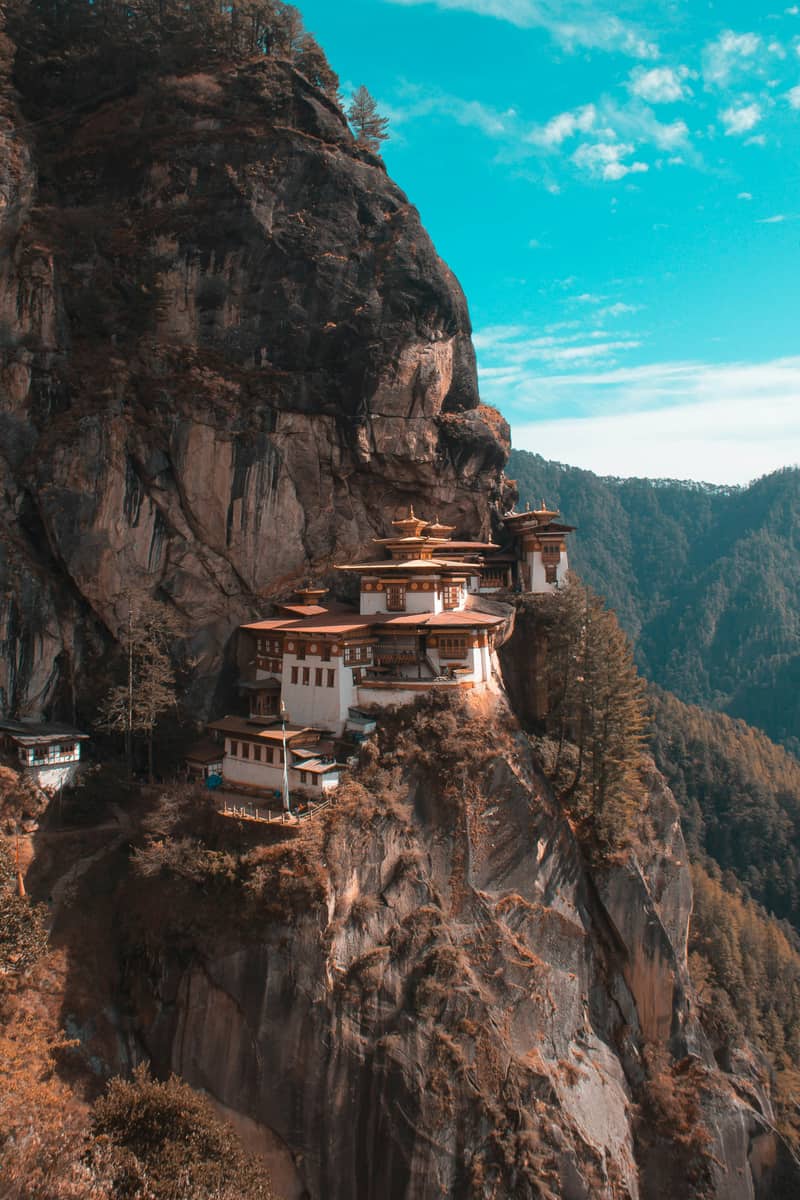
Tiger's Nest Monastery (Paro Taktsang)
Bhutan's best-known monastery, built onto a cliff face high above the Paro valley at a site associated with Guru Padmasambhava. Reaching it means a steep uphill walk of two to three hours through pine and rhododendron forest, followed by a descent and climb of stone steps across a waterfall gorge.
MonumentFull day
Thimphu (Buddha Dordenma, weekend market)
Bhutan's capital, a low-rise town spread along a river valley and famously without traffic lights. The gilded Buddha Dordenma statue looks down from a ridge to the south, while the riverside weekend market gathers farmers selling red rice, chillies, ferns and datshi cheese beside textile and handicraft stalls.
Heritage Site2–3 hours
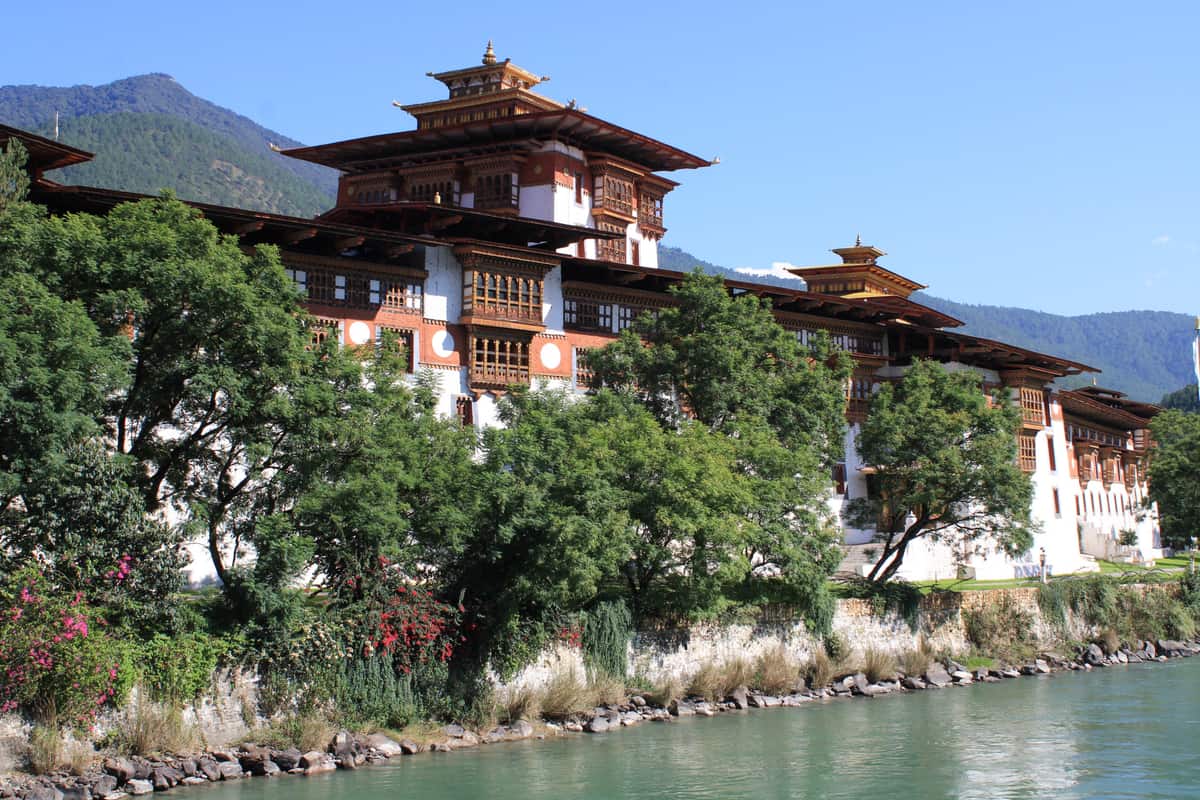
Punakha Dzong
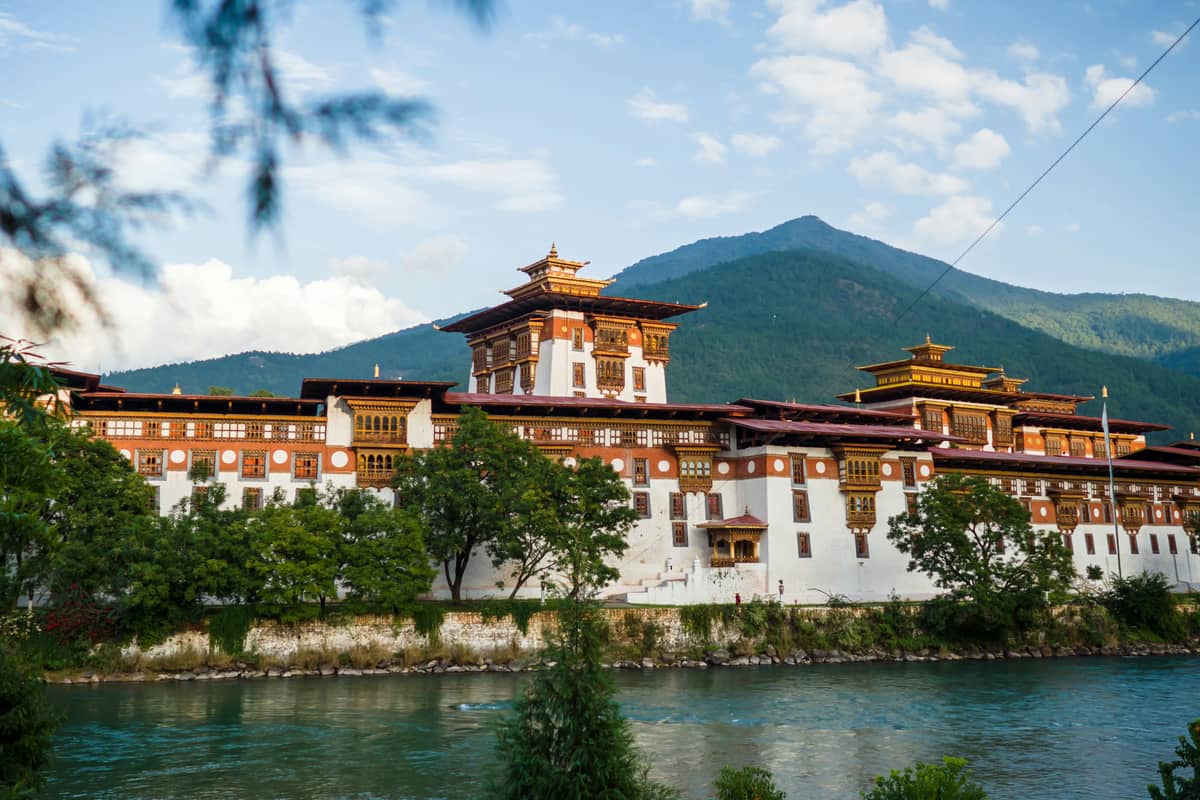
A large whitewashed fortress-monastery on the spit of land where the Pho Chhu and Mo Chhu rivers meet, and once the seat of Bhutan's government. Visitors cross a cantilever bridge, walk through successive courtyards past an old bodhi tree, and see intricately painted assembly halls and carved woodwork.
Viewpoint1 hour
Dochula Pass
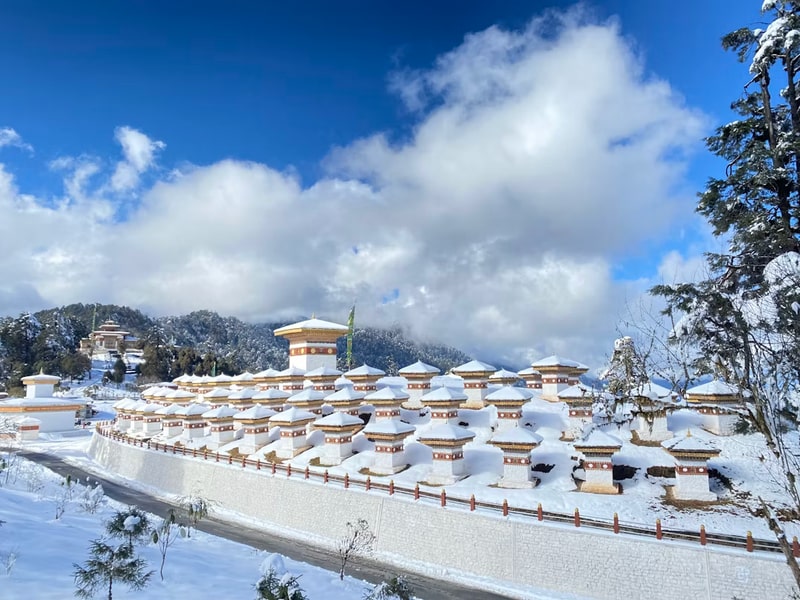
A high pass on the road between Thimphu and Punakha, marked by 108 memorial chortens arranged in tiers on a knoll. On clear winter mornings the eastern Himalayan peaks stand out across the valley; for much of the year cloud closes in. A café and a small temple sit alongside.
ViewpointHalf day
Chele La Pass
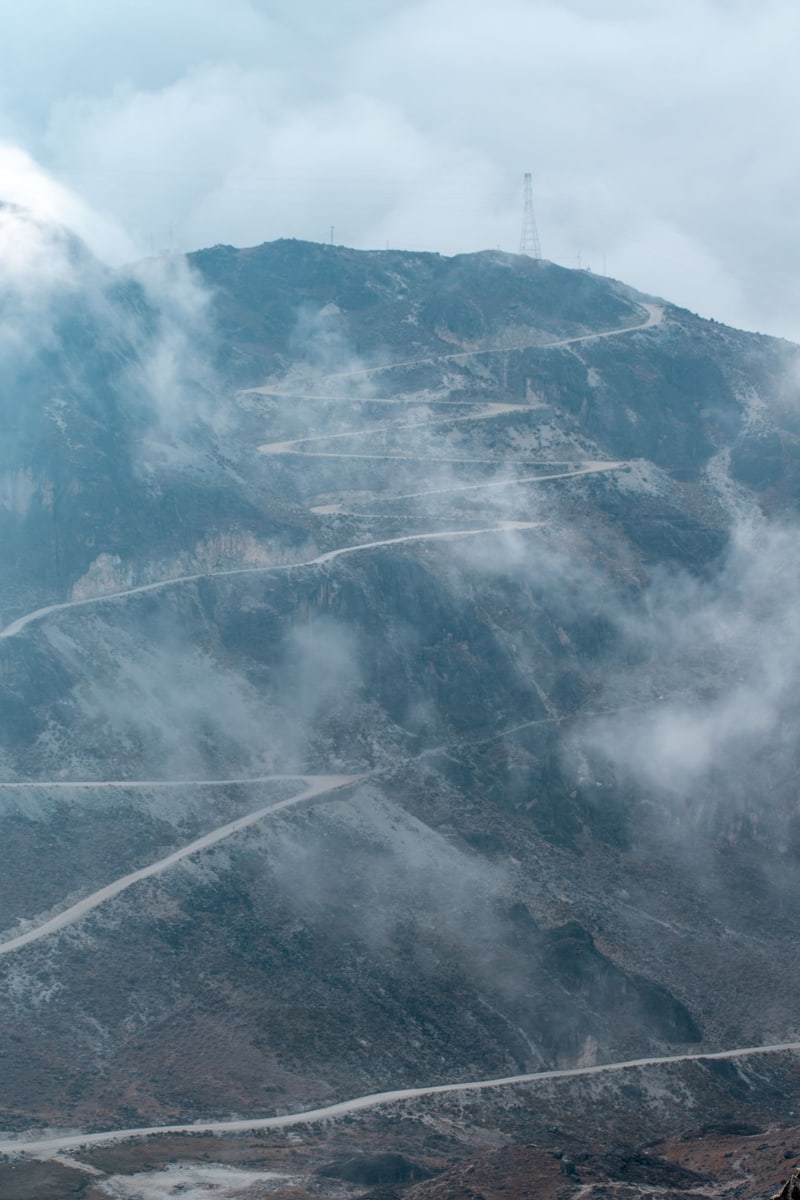
One of the highest motorable passes in Bhutan, reached by a winding drive through fir forest from Paro towards the Haa valley. The ridge is strung with prayer flags and looks over both valleys, with Jomolhari visible in clear weather. It is cold and windy, and short walks lead along the ridge.
Heritage Site1–2 hours
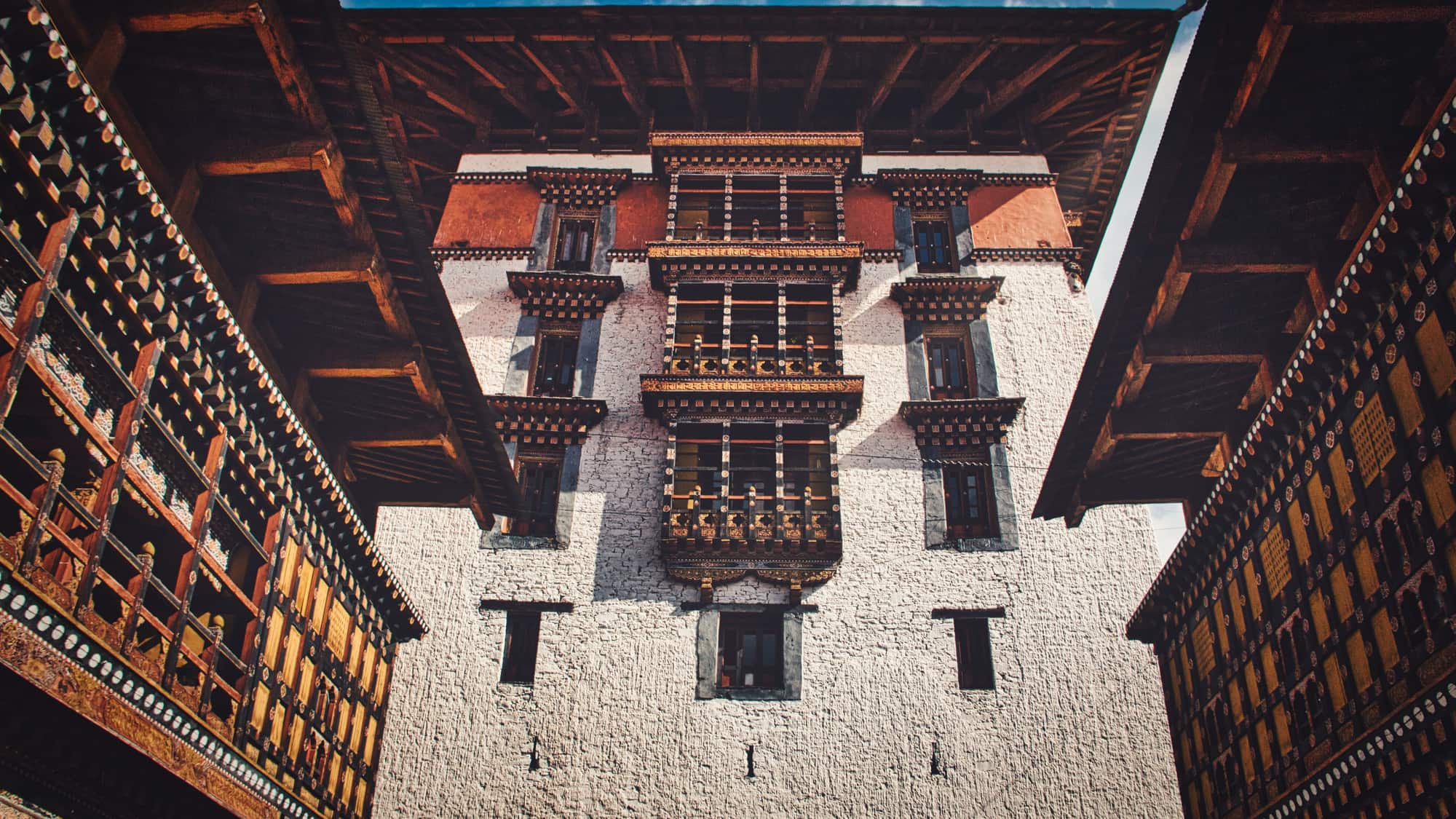
Rinpung Dzong (Paro)
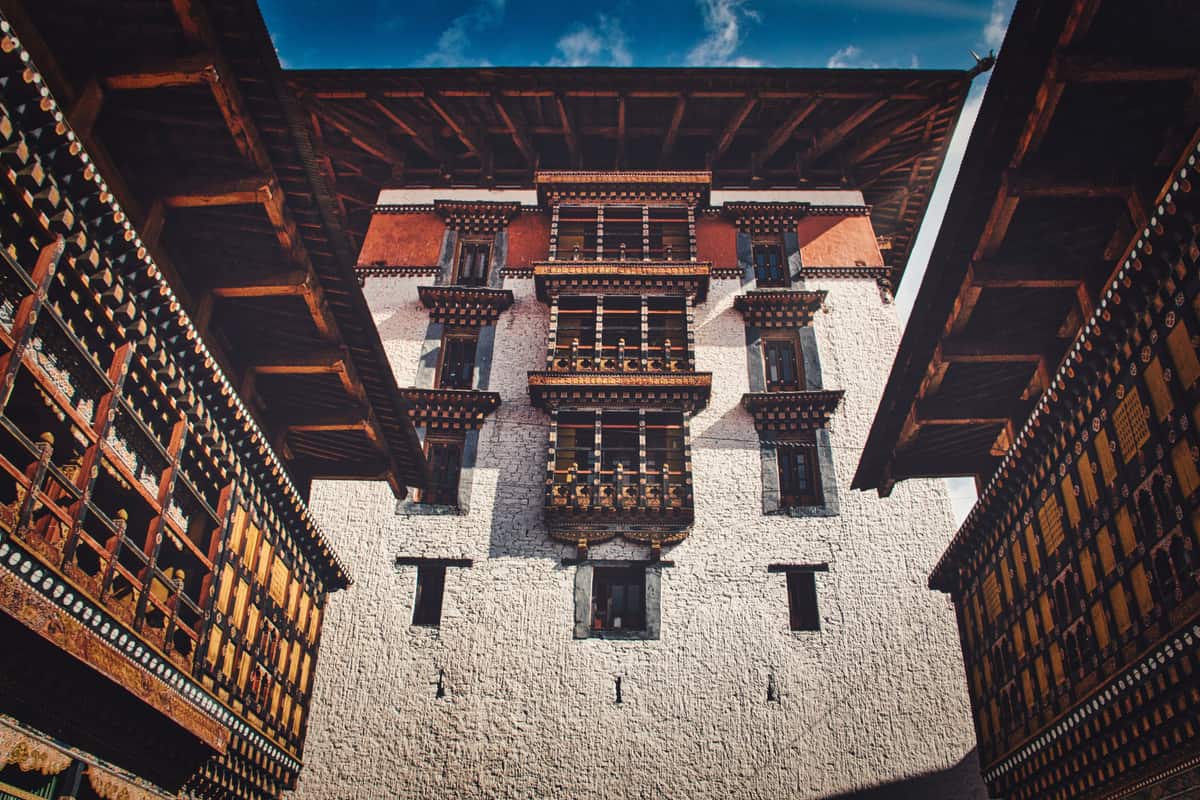
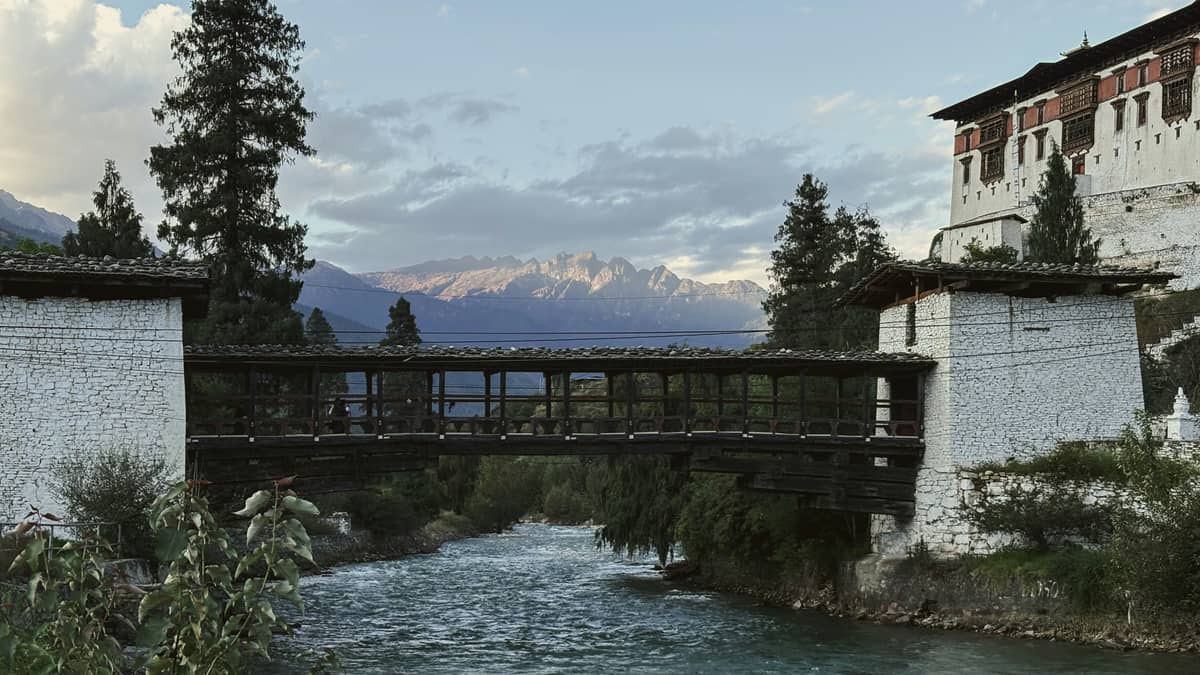
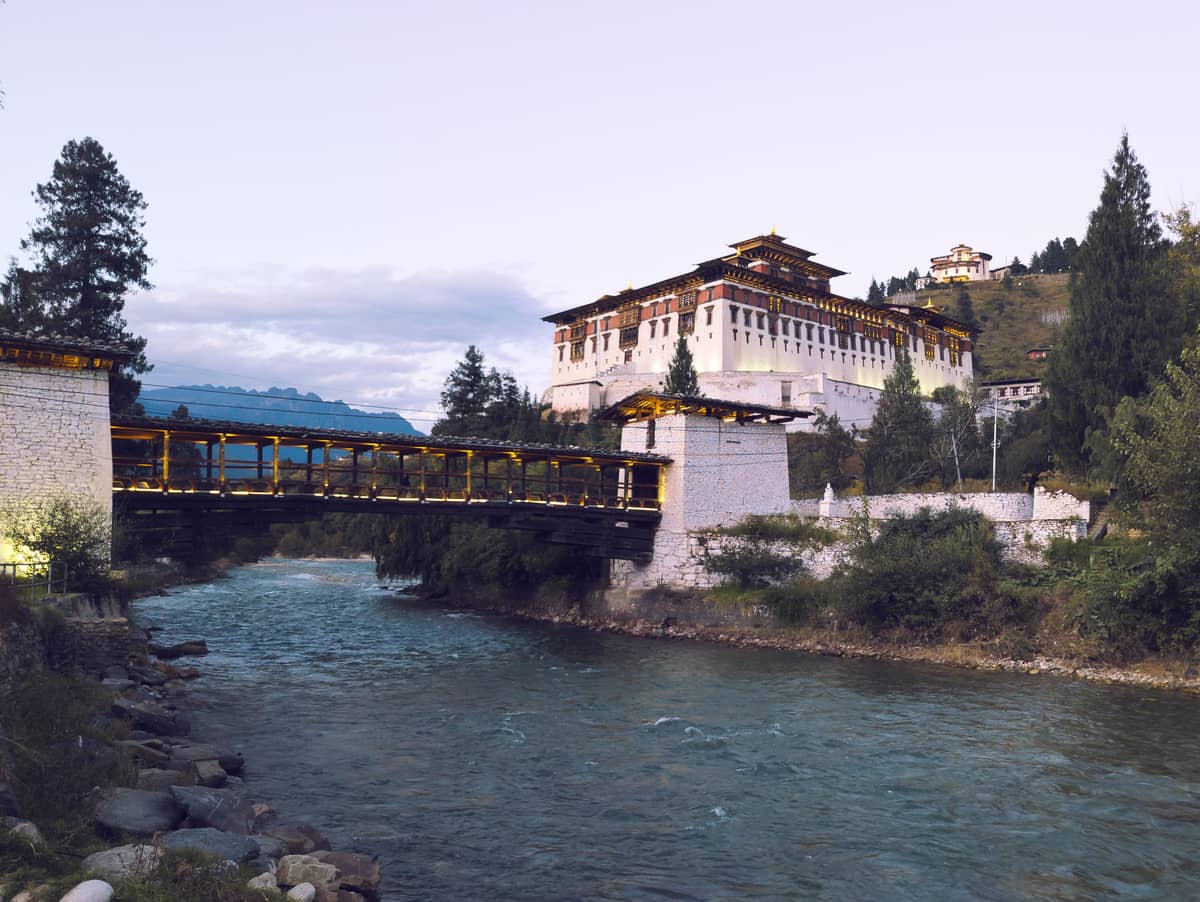
The fortress that dominates Paro town, approached across a traditional covered wooden bridge over the Paro Chhu. Inside are stepped courtyards, a central tower and galleries of religious murals; the dzong houses both a monastic body and district offices, and hosts the spring Paro tsechu festival.
bhutan-place-07.webp
Monument1–2 hours
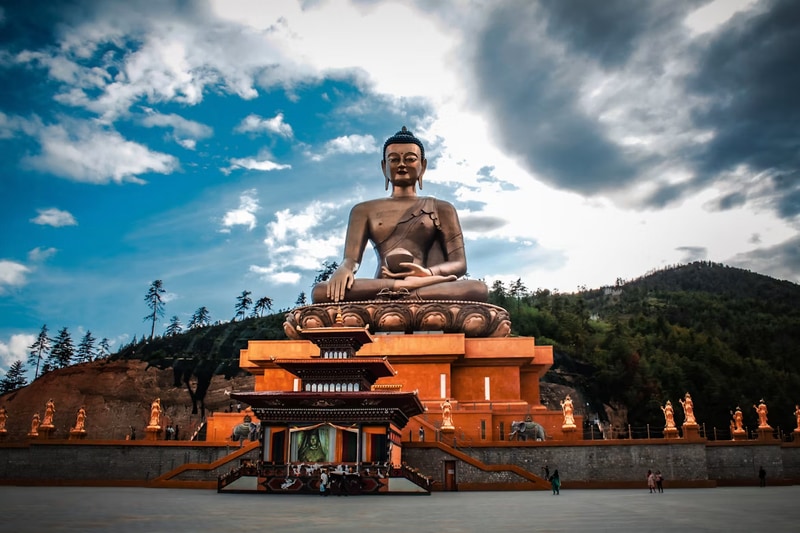
Buddha Dordenma
The large seated Buddha above Thimphu combines a major religious site with broad valley views. Visitors come for the scale, surrounding halls and perspective over the capital; dress respectfully and allow time for the approach.
Valley1 day
Paro Valley
Paro brings together the international gateway, traditional townscape, Rinpung Dzong and the starting point for the Tiger's Nest walk. It works best as a base rather than a rushed transit stop.
A starting point, not a fixed package
Sample itinerary
Draft — subject to confirmation
1 of 6 days
Day 1
Tiger's Nest Monastery (Paro Taktsang)
Visit Tiger's Nest Monastery (Paro Taktsang).
Day 2
Thimphu (Buddha Dordenma, weekend market)
Visit Thimphu (Buddha Dordenma, weekend market).
Day 3
Punakha Dzong
Visit Punakha Dzong.
Day 4
Dochula Pass
Visit Dochula Pass.
Day 5
Chele La Pass
Visit Chele La Pass.
Day 6
Rinpung Dzong (Paro)
Visit Rinpung Dzong (Paro).
Season by season
Best time to visit
Janshoulder
Febshoulder
Marpeak
Aprpeak
Maypeak
Junavoid
Julavoid
Augavoid
Seppeak
Octpeak
Novpeak
Decshoulder
PeakShoulderAvoidAwaiting data
Getting there from India
How to reach
Air
Paro is Bhutan's international air gateway, reached from selected Indian cities according to the current airline schedule.
Rail
There is no through railway into Bhutan. Indian railheads such as Hasimara support an overland entry through an approved border point.
Road
Approved land borders connect Bhutan with India. Phuentsholing is widely used, but the onward mountain journey is slow and should be sequenced carefully.
The Bhutanese ngultrum is the local currency and Indian rupees are widely accepted. Cards work in larger hotels, but carry cash for smaller towns and monasteries.
Language
Dzongkha is the national language. English is the medium of instruction and is spoken widely, while Nepali and Hindi are understood in many border towns.
Time difference
Bhutan is 30 minutes ahead of Indian Standard Time (IST).
Weather
A Himalayan climate that changes sharply with altitude: clear, pleasant springs and autumns, monsoon rain through summer, and cold, crisp winters in the higher valleys.
Connectivity
Indian roaming works in the main valleys; local Bhutan Telecom or TashiCell SIMs are simple to buy. Signal thins on mountain passes and remote trails.
Food & culture
Bhutanese cooking treats chillies as a vegetable: ema datshi pairs them with cheese, while potato or mushroom versions are gentler and red rice is common. Halal choices are limited outside Thimphu. Remove shoes and hats in temples, walk clockwise around sacred structures and ask before photographing.
Entry requirements
Visa & permits
Indian nationals do not need a visa but must obtain an entry permit. Carry a valid Indian passport or voter identity card; confirm documentation for children and the current permit process before travel.
Verify at time of bookingEntry rules can change. Confirm the latest requirements before payment and departure.
Small details, smoother days
Traveller tips
The ngultrum is pegged one-to-one with the Indian rupee and Indian notes are widely accepted, though high denominations can be refused — carry ₹100 notes.
Cover shoulders and knees inside dzongs and temples; sleeveless tops, shorts and hats are not acceptable, and photography is usually barred within shrine rooms.
Bhutan drives on the left, but roads are single-lane and constantly winding, so a hundred kilometres can take three to four hours — plan by hours, never by distance.
Smoking in public is restricted and tobacco sales are tightly controlled, so do not carry cigarettes casually across the border at Phuentsholing.
March to May and late September to November give the clearest mountain views; the June to August monsoon brings landslides and cloud over every pass.
Cards are accepted only in larger hotels, so carry cash; guides and drivers are increasingly given a modest amount at the end of the trip, though tipping is not traditional.
A closer look
Gallery
Bhutan gallery preview
This photograph could not be loaded. Try another image or close the gallery.
Useful answers
Bhutan FAQs
March to May and September to November are generally the best periods for Bhutan, with spring landscapes or clear autumn weather. December to February is colder but can bring crisp mountain views and fewer visitors. June to August is the main monsoon period, when cloud, rain and occasional road disruption can affect sightseeing and long drives.
6 to 8 days is ideal for a first Bhutan trip. That gives enough time for the main western circuit and allows the schedule to account for mountain roads rather than measuring the trip by distance alone. Travellers attempting Bhutan in four or five days should usually focus on Paro and Thimphu instead of adding too many overnight stops.
The Orbitz Holidays master-list starting price for Bhutan is ₹35,000 per person. This is a starting figure rather than a guaranteed final trip total. The final amount can vary with travel dates, hotel category, occupancy, transport and confirmed inclusions. Any unconfirmed taxes, entry charges, activities or airfare should be confirmed before travel.
Indian citizens follow a permit-based entry process rather than a conventional tourist-visa process for Bhutan. Required identity documents, entry points, guide or transport rules and any applicable visitor charges can change. Exact permit procedures, fees and processing expectations should be confirmed before travel and rechecked against official Bhutanese requirements before departure.
Bhutan suits couples, families and travellers interested in Buddhist culture, mountain landscapes and slower-paced sightseeing. Paro Taktsang, commonly called Tiger’s Nest, is the signature hike; Punakha Dzong adds major architectural and historical context; and Buddha Dordenma provides a prominent Thimphu landmark. The route rewards travellers who prefer depth over a packed checklist.
The published starting price is ₹35,000 per person. Exact hotel category, meals, transfers, sightseeing, permits, taxes and transport are included only when stated in the final proposal. Confirm the itemised inclusions before payment.
Start a conversation
Plan your Bhutan holiday
Share the essentials. An Orbitz Holidays travel planner can follow up with suitable options.